Introduction
When shipping between the US and Canada, the quoted freight rate is not always the final transportation cost. Some quotes exclude services your shipment needs.
Cross-border less-than-truckload (LTL) shipments can carry extras for fuel, border processing, documentation, delivery requirements and freight characteristics. Accessorial charges can make a cheaper quote more expensive.
Understanding them helps you compare offers and reduce invoice surprises. Canadian Freight Quote provides a resource for comparing US–Canada freight options.
What Are Accessorial Charges in Cross-Border Freight Shipping?
Accessorial charges are fees for services or conditions beyond standard freight movement, such as delivery requiring special equipment.
Separate these cost categories:
Cost category | What it generally covers |
|---|---|
Base freight rate | Transportation based on the quoted route, freight details and service |
Fuel surcharge | A fuel-related adjustment under the carrier’s pricing rules |
Accessorial charges | Additional services, such as liftgate use or special delivery arrangements |
Other shipment-related costs | Customs brokerage, applicable duties and taxes, or other separately billed costs |
Charges depend on the carrier, shipment, route, service level and delivery requirements. Request a quote identifying known extras and potential additional fees.
Common Accessorial Charges When Shipping Between US and Canada
Review these US-Canada freight shipping charges before accepting a rate; not all will apply.
Fuel Surcharge
A fuel surcharge adjusts pricing for fuel costs, often using a percentage linked to a published fuel index.
For example, FedEx Freight publishes weekly adjustments for its intra-Canada services; cross-border pricing must be checked against the applicable service rules. Ask whether fuel is included, which charges it applies to, and whether the amount can change before pickup.
Border Crossing or Cross-Border Processing Charges
Some arrangements include a carrier charge for cross-border processing or handling freight moving under customs control. This is distinct from the fee for preparing a customs entry.
Ask whether border-related transportation charges are included. There is no universal border fee applying identically to every shipment.
Customs Clearance Fees
Customs brokerage fees can cover preparing release and accounting information and handling related customs transactions. They are separate from transportation charges and from government duties or taxes.
The Canada Border Services Agency explains that brokerage fees are a private transaction between the broker and client. Requirements depend on the goods, direction of travel and import circumstances. Confirm the clearance arrangement and who pays each cost before booking.
Documentation Fees
Providers may charge for document preparation, amendments or additional processing. Routine documentation support may also be included, so ask which activities trigger a fee.
Use consistent information across the commercial invoice and bill of lading. For Canadian imports, CBSA invoice guidance requires accurate information about the parties, goods, quantities and value, with additional required details supplied as applicable. Incomplete information can delay release.
Delivery Accessorials: Liftgate, Residential & Special Handling Charges
Check pickup and delivery conditions at both ends of the journey.
Liftgate Service
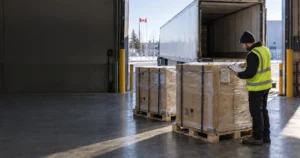
A liftgate is a powered platform that moves freight between the truck bed and ground level. It may be needed when a location lacks a suitable loading dock or forklift.
Disclose the requirement when requesting a quote, including whether it applies at pickup, delivery or both. Confirm that the pallet’s size and weight suit the equipment. Liftgate service does not automatically include moving freight inside a building.
Residential Delivery
Residential addresses may involve restricted truck access and different unloading arrangements. A business operating from a home may still be classified as residential under the carrier’s rules.
Identify the address accurately. A residential fee and a liftgate fee may both apply; requesting one does not automatically cover the other.
Other Special Handling Requirements
Additional charges may arise for:
- Limited-access locations: Construction sites, schools, secure facilities or other sites covered by the carrier’s definition.
- Appointment delivery: Scheduled receiving arrangements or a specific delivery window, depending on the service rules.
- Re-delivery or failed delivery: Another trip when delivery cannot be completed; storage or waiting charges may also apply.
- Unusual freight: Oversized, very heavy, non-stackable or difficult-to-handle items requiring additional space or equipment.
Confirm availability and pricing for your handling requirements.
How Much Can Accessorial Charges Add to a Cross-Border Shipment?
There is no reliable universal amount. Fees may be flat charges, percentages, weight-based amounts or time-based charges, depending on the carrier and service.
Costs depend on:
- Origin, destination and route.
- Shipment dimensions, weight and freight class, where applicable.
- Service level and handling requirements.
- Pickup and delivery location types.
- Border-processing and documentation requirements.
- Carrier pricing rules and fuel pricing.
Compare total expected transportation cost: base freight + applicable fuel + known transportation accessorials. Then identify separately any customs brokerage, duties, taxes or other import costs needed for your broader landed-cost budget.
For example, a lower base rate excluding required liftgate service may exceed a higher quote that includes it. Compare equivalent services, the same currency and the same shipment assumptions.
How to Avoid Unexpected Freight Charges When Shipping Between the US and Canada
- Provide accurate weight and dimensions. Measure the packaged freight, including pallets and overhang. Incorrect details can prompt reweighing or rating adjustments.
- Identify commercial versus residential locations. Include access restrictions and receiving hours at both ends.
- State liftgate requirements. Check unloading equipment with the receiver before assuming dock delivery is possible.
- Provide complete shipment and customs documentation. Check descriptions, quantities, values and relevant origin information for consistency.
- Ask which accessorial charges may apply. Request the triggers for waiting, storage, appointment and re-delivery charges.
- Compare total expected transportation costs. Use identical service requirements when evaluating each cross-border freight quote.
- Confirm inclusions and exclusions before booking. Keep written confirmation of charges, quote validity, currency and payment responsibilities.
Accurate information reduces avoidable adjustments, but cannot prevent every unforeseen charge.
What Information Do You Need for an Accurate US–Canada Freight Quote?
Have the following ready when requesting a Canada US freight quote:
Information | Details to provide |
|---|---|
Pickup and delivery locations | Postal/ZIP codes, full addresses and contacts |
Shipment weight | Total gross weight, including packaging |
Pallets or pieces | Number of handling units |
Dimensions | Length, width and height of each unit, with units of measurement |
Freight description | Specific goods, packaging and handling restrictions |
Freight class | Correct class, where applicable; request help if uncertain |
Location type | Commercial or residential, dock availability and access restrictions |
Liftgate requirements | Pickup, delivery, both or neither |
Shipping timeframe | Ready date, required delivery date and receiving hours |
Cross-border details | Direction, importer details, customs arrangement, goods value and origin information |
For LTL shipping from Canada to the USA, freight class and customs tariff classification serve different purposes.
Get a Clearer Quote for Shipping Between US and Canada
Compare the complete freight cost and clarify separate customs-related costs before selecting an option.
Canadian Freight Quote supports LTL freight quotes, cross-border transportation, freight brokerage and logistics coordination for US–Canada shipments. Share your freight details and request clarification on inclusions, delivery services and potential adjustments.
Conclusion
Accessorial charges are normal in cross-border shipping between Canada and the USA. Reduce surprises by describing your freight accurately, confirming receiving conditions and reviewing the quote before booking.
Need help estimating the cost of your next US–Canada shipment?
FAQs
What accessorial charges can apply when shipping between the US and Canada?
Common extras include liftgate, residential, limited-access, appointment and re-delivery charges. Fuel, border processing and documentation may also be billed separately. Customs brokerage, duties and taxes are distinct cost categories.
Is a fuel surcharge included in a US–Canada freight quote?
It depends on the quote. Fuel may be included in the total or listed separately. Confirm the applicable surcharge and whether it can change before shipping.
Are customs clearance and documentation fees included in cross-border shipping costs?
Sometimes, but inclusion is not automatic. Ask which clearance and documentation services are covered, which are billed separately, and who pays applicable duties and taxes.
When might I be charged for liftgate or residential delivery service?
Liftgate charges may apply when powered equipment is needed to unload at ground level. Residential charges depend on the address classification. Both may apply to one delivery.
How can I avoid unexpected accessorial charges on a cross-border freight shipment?
Provide accurate freight measurements, disclose location and unloading requirements, and prepare complete documents. Request written inclusions and exclusions, then compare quotes using the same expected services and currency.