Introduction
For Vancouver businesses, freight expenses affect product margins, customer pricing and the cost of keeping inventory moving. Whether you ship supplies across British Columbia, send orders elsewhere in Canada or move goods across the US border, small booking decisions can influence the final bill.
Finding suitable shipping services in Vancouver starts with understanding what you are paying for. Distance matters, but so do package dimensions, weight, shipment volume and delivery requirements. A few pallets going to a warehouse with a loading dock may need a different service than equipment heading to a construction site.
Learning how to reduce freight shipping costs means matching transportation to the shipment. Less-than-truckload shipping, accurate measurements and comparable freight quotes can help control spending while protecting suitable service levels.
This guide explains which details to check before booking and where avoidable costs arise. Canadian Freight Quote provides a resource for comparing freight options for commercial shipments within Canada and between Canada and the United States.
What Affects Shipping Costs in Vancouver?
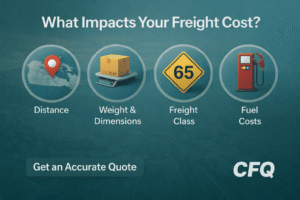
Freight rates reflect the route, the shipment and the work required at pickup and delivery.
- Origin and destination: Exact postal codes, carrier coverage and available capacity affect pricing.
- Weight and dimensions: Heavy freight and bulky, lightweight freight create different space and capacity demands.
- Pallet count and volume: More pallets, overlength pieces or non-stackable freight can require additional trailer space.
- Freight classification: Where NMFC classification applies, density, handling, stowability and liability influence the class.
- Service requirements: Fuel surcharges, expedited delivery and special handling affect the total.
Two shipments travelling similar distances can therefore receive different quotes. Delivering stackable cartons to a warehouse differs from moving fragile equipment to a location without unloading facilities.
You cannot control every rate component. You can control packaging, shipment accuracy, booking timing and how clearly you communicate delivery needs.
Choose LTL Shipping When It Fits Your Shipment
Less-than-truckload, or LTL, shipping combines freight from multiple businesses in one trailer. Your shipment shares transportation capacity instead of requiring a dedicated truck.
For eligible palletised business freight, LTL shipping in Vancouver can be economical when the shipment does not justify an entire trailer.
Shipping method | Usually worth considering for | Main consideration |
|---|---|---|
Parcel | Individual packages within carrier limits | Package size, weight and handling |
LTL | A few pallets or larger commercial goods | Shared capacity and potential terminal transfers
|
Full truckload | Larger volumes or dedicated capacity requirements
| Cost of reserving the truck
|
For example, a Vancouver distributor sending three pallets to Calgary could compare LTL against dedicated truckload service.
However, pallet count alone does not determine the best choice. Fragility, urgency, trailer space and transfer requirements also matter. Larger shipments may justify volume or truckload pricing.
Compare Freight Quotes Before Booking
When reviewing freight shipping quotes in Vancouver, compare equivalent services using identical shipment details. Different carriers may price the same route differently because their networks and available capacity vary.
Check each quote for:
- The same addresses, freight details and pickup date.
- Comparable transit expectations and delivery requirements.
- Included fuel surcharges and accessorial charges.
- Quote currency, validity period and exclusions.
The lowest base rate is not necessarily the lowest total shipping cost. LTL invoices can include line-haul charges, fuel surcharges, and fees for additional services.
Ask whether liftgate service, appointments or restricted-access delivery are included when required. Confirm whether transit times are estimates or backed by a specific service commitment.
A freight brokerage can make comparisons more efficient by reviewing suitable carrier options through one enquiry.
Reduce Costs with Accurate Freight Measurements and Packaging
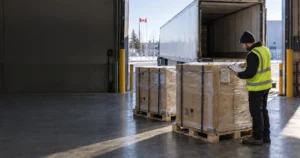
Measure freight after packaging is complete. Include the pallet, wrapping, protective materials and any overhang. Use the outermost points when recording length, width and height.
Choose secure packaging that fits the goods without unnecessary space. Stack or palletise compatible items only when safe and permitted by the carrier. Confirm whether other freight can safely sit above your shipment.
Before requesting a quote:
- Weigh the goods together with packaging and pallets.
- Record each handling unit’s dimensions and quantity.
- Describe the commodity clearly.
- Identify overlength, fragile or non-stackable pieces.
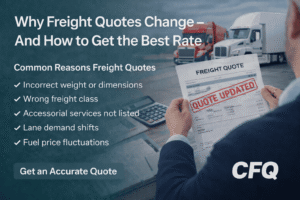
Incorrect details can lead to reweighing, reclassification where applicable, rate adjustments or additional charges. Accurate information helps the carrier price the shipment appropriately.
Plan Shipments and Optimise Delivery Requirements
Planning gives you time to compare standard services before paying for urgent transportation. Share genuine deadlines and ask which available options meet them.
Consolidate compatible orders when destinations, delivery dates and inventory needs allow. Check whether transportation savings justify any additional storage or waiting time.
Before pickup, confirm that:
- Freight will be packed, labelled and accessible.
- Pickup and receiving hours are accurate.
- Required appointments are arranged.
- Suitable unloading equipment is available.
Confirm whether each location has a compatible loading dock or forklift. If a liftgate is necessary, request it upfront.
Restricted-access locations, waiting time, failed deliveries and additional handling can affect charges. Describe the actual site conditions rather than removing a necessary service to lower the quote.
Savings depend on the route, carrier availability and shipment requirements.
How to Control Costs on Cross-Border Freight Shipments
Canada–US shipments require coordination between transportation, documentation and customs clearance. Prepare the commercial invoice, bill of lading and any additional documents required for the goods and direction of travel.
Provide accurate product descriptions, quantities, values, currency and country-of-origin information. Origin is not necessarily the country from which the shipment departs. Canadian and US customs guidance emphasises accurate information about the goods, their value and origin.
Separate your budget into:
- Transportation: Freight, fuel and applicable transportation accessorials.
- Customs-related costs: Clearance fees, applicable duties, taxes and other import charges.
Before booking, confirm who prepares documentation, arranges clearance and pays each component. Ask which costs are included when comparing Canada US freight shipping rates.
Incomplete information can delay movement and create additional handling, waiting or storage costs. Unexpected delivery requirements can also change the transportation bill.
Review Canadian Freight Quote’s guide to US–Canada freight accessorial charges before finalising arrangements.
How to Choose the Right Shipping Services in Vancouver
Compare providers by freight options, route coverage, quote transparency and support. Affordable shipping services in Vancouver should meet your operational requirements as well as your budget.
Reliability matters when missed deliveries interrupt production or leave customers waiting. Confirm suitable transit expectations and how shipment issues are handled.
Prepare this information before requesting pricing:
- Pickup and delivery addresses, including postal or ZIP codes.
- Commodity, pallet count, packaged dimensions and total weight.
- Ready date and required delivery date.
- Site access, receiving hours and equipment needs.
- Cross-border documentation and clearance arrangements, where applicable.
At Canadian Freight Quote, we help businesses compare freight options and arrange suitable transportation. Submit accurate shipment information to receive a useful, relevant quote.
Conclusion
Reducing freight costs starts with better shipment decisions. Choose a suitable shipping method, compare equivalent quotes, measure packaged freight accurately and plan pickup and delivery requirements before booking.
LTL can suit smaller commercial shipments, while larger volumes or tighter handling requirements may justify another option. For cross-border freight, confirm documentation, clearance responsibilities and costs beyond transportation.
The best choice balances total cost, reliability and delivery needs. Use your next shipment as an opportunity to review those details together. A complete quote request gives providers a clearer basis for pricing and helps your business make a confident booking decision.
FAQs
How can I reduce shipping costs from Vancouver without compromising delivery reliability?
Compare carriers that meet your delivery requirements, provide accurate measurements and book ahead where possible. Consolidate compatible orders when practical, and confirm required services upfront.
Are LTL shipping services in Vancouver cheaper than full truckload shipping?
LTL often costs less for a few suitable pallets. As shipment volume increases, compare volume and truckload pricing. Urgency, handling needs and trailer space also influence the choice.
What factors affect freight shipping quotes in Vancouver?
Key factors include origin, destination, weight, dimensions, pallet count, freight class where applicable, fuel surcharges, available capacity and pickup or delivery requirements.
How can I avoid unexpected charges when shipping freight from Vancouver to the USA?
Provide complete freight and customs information. Confirm clearance responsibilities, quote currency, included charges and delivery access. Ask about possible waiting, storage and redelivery fees.
What information do I need to get an accurate freight quote in Vancouver?
Provide exact addresses, commodity descriptions, packaged dimensions, total weight, handling-unit quantities, shipment dates and equipment needs. Include relevant cross-border details and site restrictions.